mission to Mars Started

NASA’s latest mission to Mars, InSight, is set to launch early Saturday morning in pursuit of a number of historic firsts in space travel and planetology. The lander’s instruments will probe the surface of the planet and monitor its seismic activity with unprecedented precision, while a pair of diminutive CubeSats riding shotgun will test the viability of tiny spacecraft for interplanetary travel.

read more

The Mars Quest Begins Now

The success of this mission could mark a significant milestone in space exploration history.

Mars Exploration

The Roadshow aims to engage communities across California with family-friendly science activities, exhibits, and public talks, drawing parallels between earthquakes and the marsquakes InSight is designed to detect.

Thank you! Your message has been sent.
Unable to send your message. Please fix errors then try again.

NASA Mars Mission Tours California

Scientists and engineers with NASA's next mission to Mars will be touring California cities starting this month.

NASA's InSight mission will be the first interplanetary launch from the West Coast. In preparation for its May launch, the Mars InSight Roadshow is stopping at cities along the earthquake-prone California coast to explain how the robotic lander will study Mars' deep interior using seismology and other geophysical measurements.

The Roadshow brings family-friendly science activities, exhibits and public talks to communities throughout California, making comparisons between earthquakes and the marsquakes that InSight will try to detect. 

more about mission

Photo by NASA

Robotic Lander

Learn how the robotic lander will delve into Mars' interior using seismology and measurements.

learn more

Earthquake Comparisons

Exciting news for California residents! NASA's InSight mission team will tour cities this month.

learn more

NASA INSIGHT

Seismic Exploration

Exciting news for California residents! NASA's InSight mission team will tour cities this month.

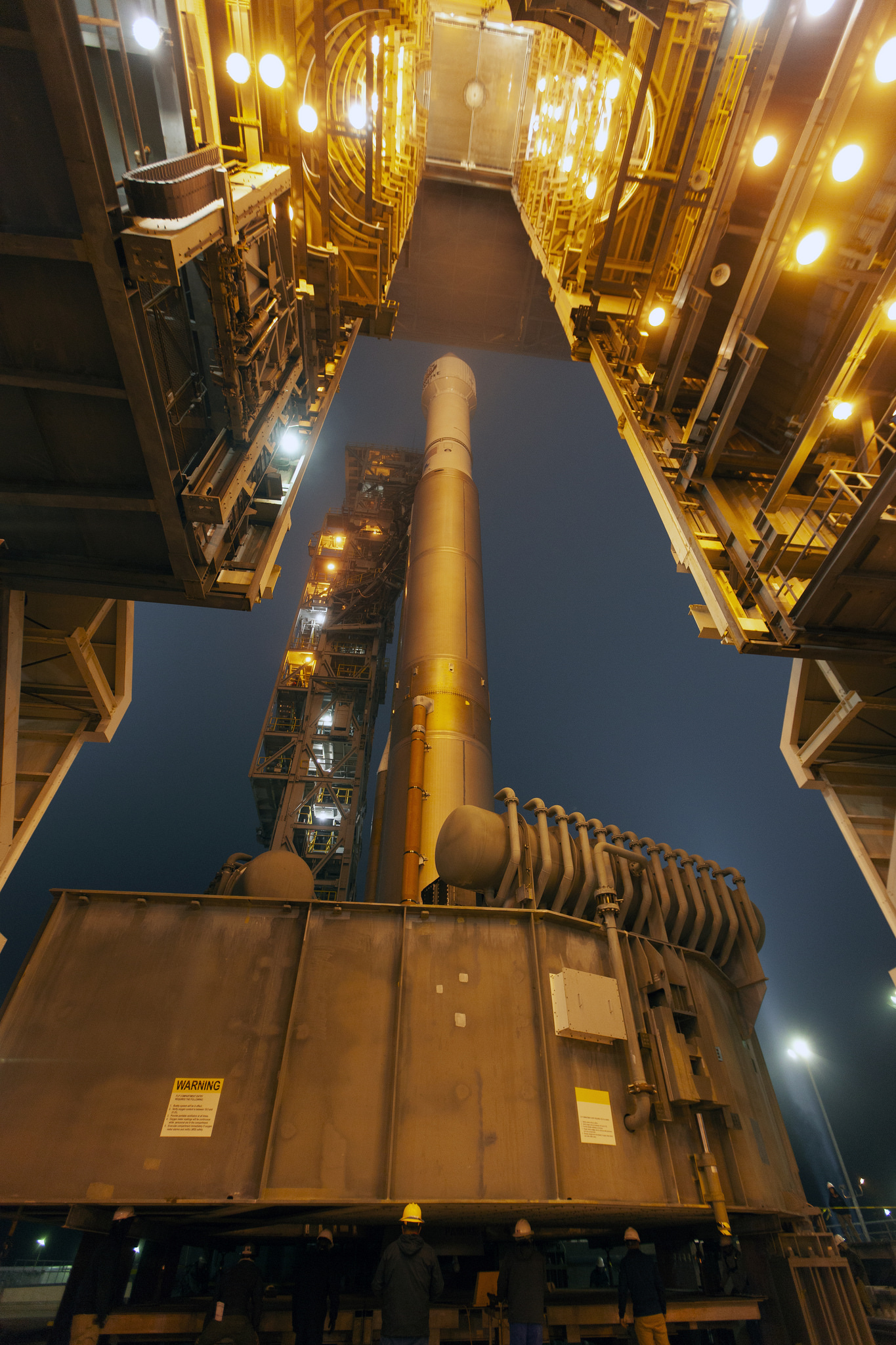
NASA’s Mars Interior Exploration using Seismic Investigations, Geodesy and Heat Transport (InSight) mission is on a 300-million-mile (483-million-kilometer) trip to Mars to study for the first time what lies deep beneath the surface of the Red Planet. InSight launched at 4:05 a.m. PDT (7:05 a.m. EDT) Saturday from Vandenberg Air Force Base, California.

"The United States continues to lead the way to Mars with this next exciting mission to study the Red Planet’s core and geological processes," said NASA Administrator Jim Bridenstine. "I want to congratulate all the teams from NASA and our international partners who made this accomplishment possible.

 As we continue to gain momentum in our work to send astronauts back to the Moon and on to Mars, missions like InSight are going to prove invaluable."

First reports indicate the United Launch Alliance (ULA) Atlas V rocket that carried InSight into space was seen as far south as Carlsbad, California, and as far east as Oracle, Arizona. One person recorded video of the launch from a private aircraft flying along the California coast.

read more

Space Exploration

Learn how the robotic lander will delve into Mars' interior using seismology and measurements.

California Tour

The Mars InSight Roadshow in California features family-friendly science activities and public talks.

Mars Roadshow

Learn how the robotic lander will delve into Mars' interior using seismology and measurements.

Seismic Exploration

Join the Roadshow to explore the fascinating world of space exploration and Mars discoveries.

Mission to Mars

The Mars InSight Roadshow in California features family-friendly science activities and public talks.

Why Mars?

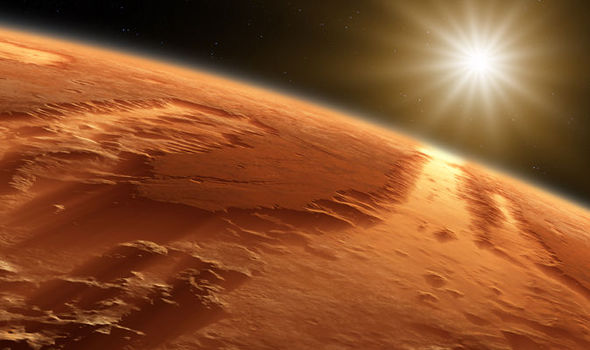
Previous missions to Mars have investigated the surface history of the Red Planet by examining features like canyons, volcanoes, rocks and soil. However, signatures of the planet's formation can only be found by sensing and studying its "vital signs" far below the surface.

In comparison to the other terrestrial planets, Mars is neither too big nor too small. This means that it preserves the record of its formation and can give us insight into how the terrestrial planets formed. It is the perfect laboratory from which to study the formation and evolution of rocky planets. Scientists know that Mars has low levels of geological activity. But a lander like InSight can also reveal just how active Mars really is.

more about mission

Photo by NASA

Mars Exploration

Discover comparisons between earthquakes and 'marsquakes' that InSight aims to detect on Mars.

Learn More

Family-Friendly Events

Learn how the robotic lander will delve into Mars' interior using seismology and measurements.

Learn More

NASA's InSight lander

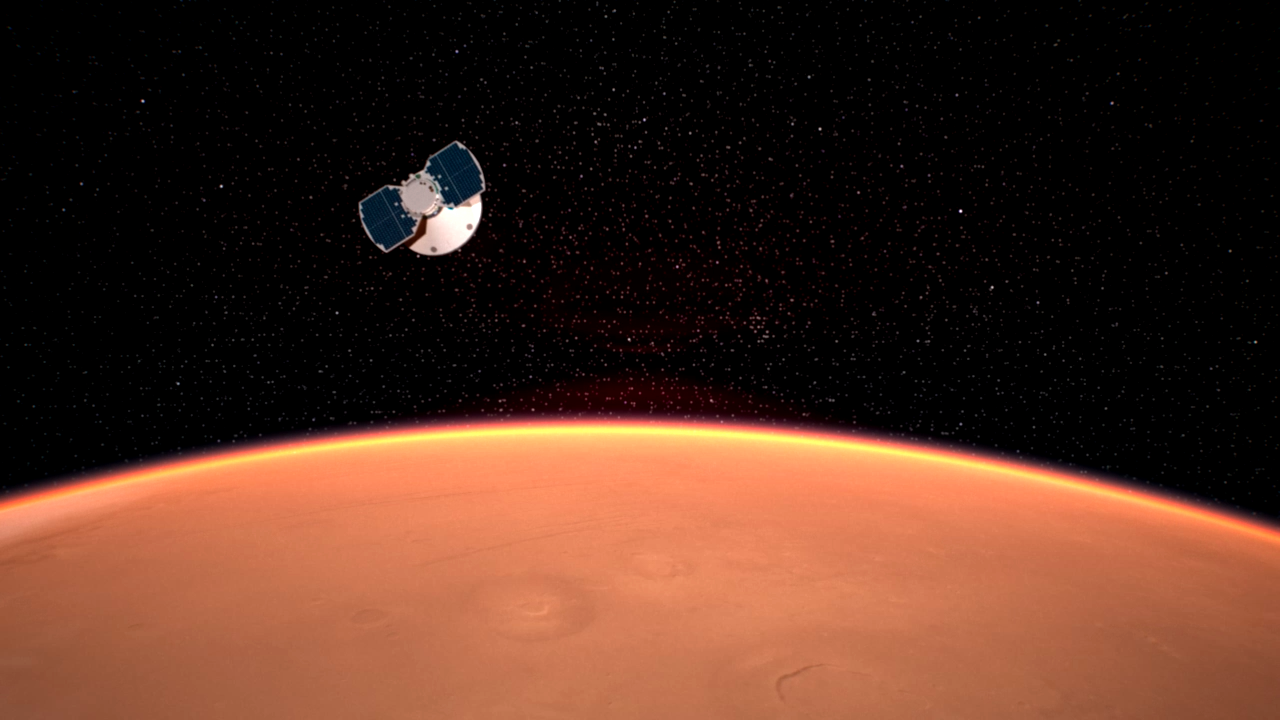
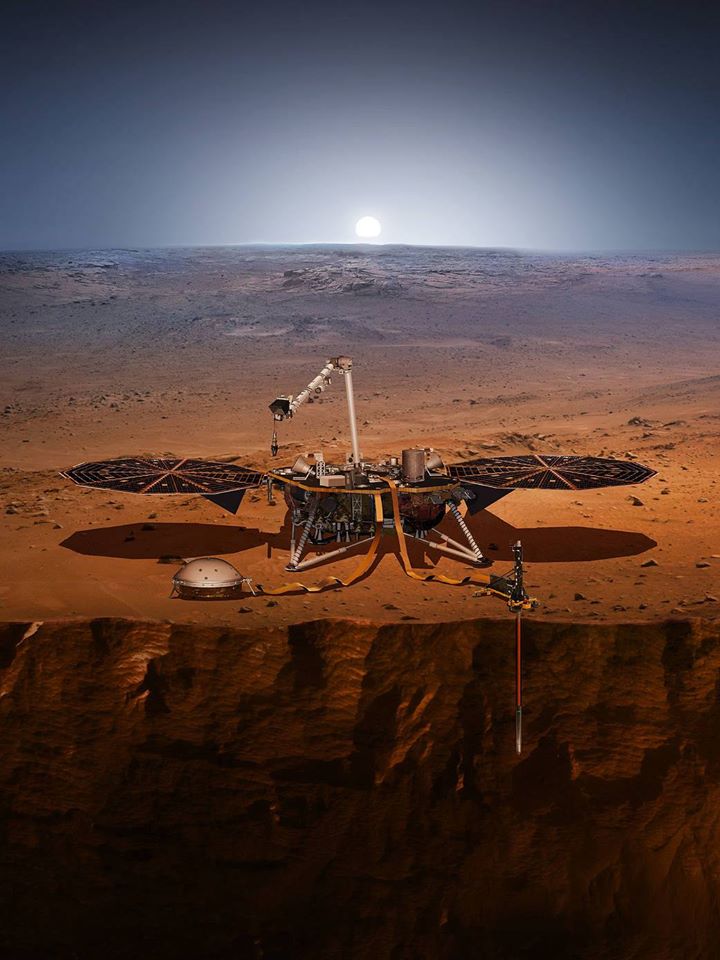
InSight, short for Interior Exploration using Seismic Investigations, Geodesy and Heat Transport, is a Mars lander designed to give the Red Planet its first thorough checkup since it formed 4.5 billion years ago. It is the first outer space robotic explorer to study in-depth the "inner space" of Mars: its crust, mantle and core. 

continue reading

Mission Overview

While in the landed configuration for the last time before arriving on Mars, NASA's InSight lander was commanded to deploy its solar arrays to test and verify the exact process that it will use on the surface of the Red Planet.

continue reading

Image Credit: Lockheed Martin Space

Mars Exploration

The InSight mission marks the first interplanetary launch from the West Coast of the USA.

Seismic Exploration

The Mars InSight Roadshow in California features family-friendly science activities and public talks.

Marsquake Detection

Join the Roadshow to explore the fascinating world of space exploration and Mars discoveries.